Hanoi is considering rerouting intercity passenger trains away from a densely populated section of its historic core, a move aimed at resolving long-standing railway safety violations while redefining the future of the city’s famous Railway Cafe Street, a destination well-known among international travelers.
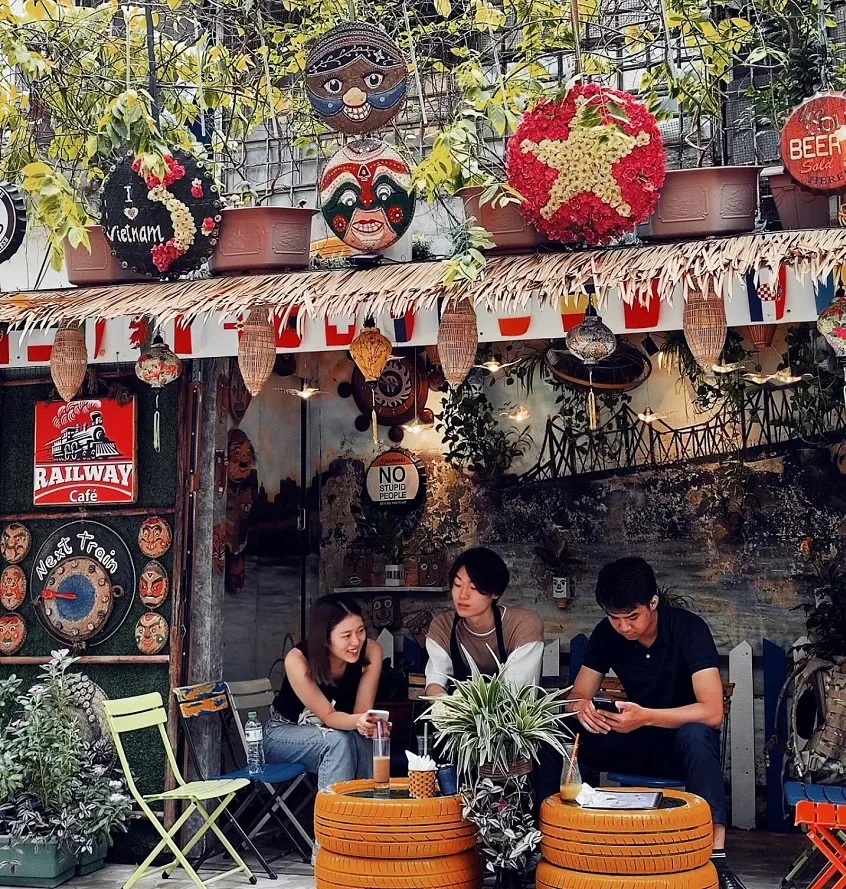
A cafe along Hanoi's Railway Cafe Street. File photo
Railway Cafe Street, often called “train street” by foreign visitors, runs through narrow residential lanes where cafés sit just inches from active railway tracks. Over the past decade, it has become one of Hanoi’s most photographed attractions, but it has also raised persistent safety concerns as tourists crowd the tracks whenever trains pass.
Under a proposal by the Hanoi People’s Committee, passenger trains would no longer operate through sections of Le Duan, Tran Phu and Phung Hung streets, along the line connecting Hanoi Station and Long Bien Station.
Instead, southbound trains would terminate at Hanoi Station, while northbound services would end at Gia Lam Station, located on the eastern edge of the city. Passenger transfers between the two stations would be coordinated by the Hanoi Department of Construction and relevant agencies.
The proposal signals a clear shift away from an improvised form of railway tourism that has drawn global attention but repeatedly violated safety regulations. Authorities say the goal is not to erase the attraction, but to address the risks created by trains operating through crowded residential areas never designed for tourism.
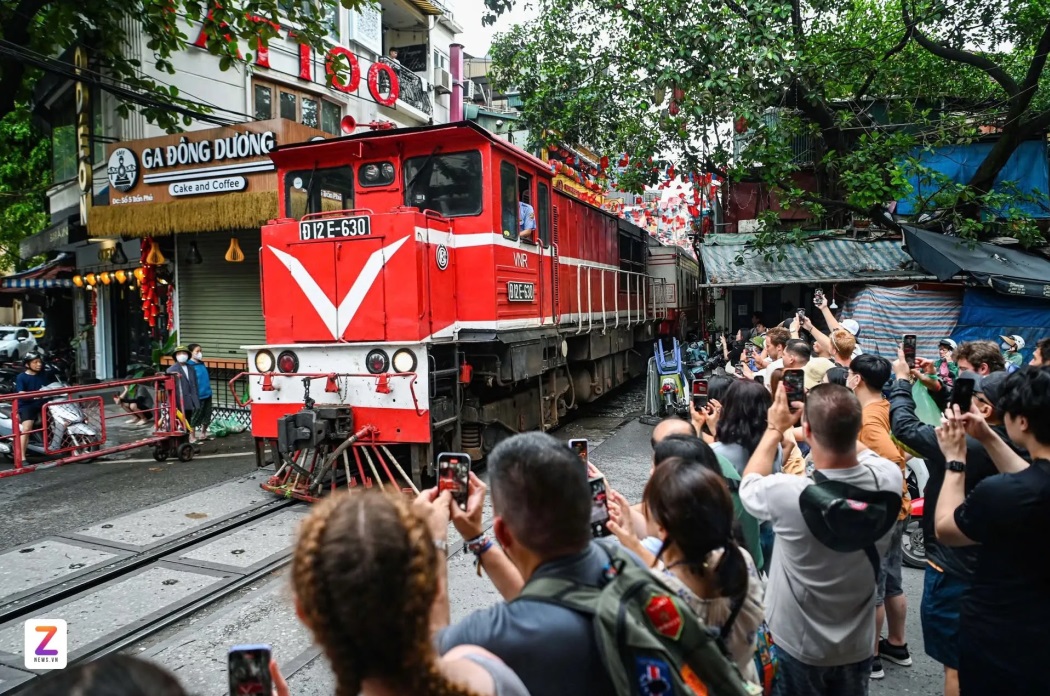
Tourists crowd the trackside, cameras raised, whenever a train passes Hanoi Railway Cafe Street. Photo: Penci Black
At the same time, the city is exploring ways to maintain urban connectivity without damaging the Old Quarter’s historic character. Among the options under study is routing Urban Railway Line 1 through the Old Quarter, allowing public transport links to continue while supporting long-term, regulated tourism development rather than spontaneous, high-risk activity.
This rail adjustment is part of a broader plan to upgrade one of Hanoi’s most sensitive urban corridors, which spans the western edge of the Old Quarter and the eastern boundary of the Thang Long Imperial Citadel, a UNESCO World Heritage site.
To facilitate this transformation, the city has asked the Ministry of Construction to transfer national railway infrastructure assets from Gia Lam Station to Hanoi Station by the second quarter of 2026, clearing the way for renovations and improvements to surrounding public spaces.
At the center of this long-term vision stands Long Bien Bridge, the century-old steel structure that connects the Old Quarter with localities across the Red River. More than a transport link, the bridge is an emotional and historical symbol for generations of Hanoi residents. The surrounding area includes 131 stone railway arches along Phung Hung Street and Gam Cau, spaces that planners believe could be transformed into a unified cultural, commercial and tourism district.
To that end, Hanoi has partnered with the French Embassy on a technical assistance project to study the renovation of Long Bien Bridge. The initiative assesses the bridge’s structural condition, proposes safety upgrades and explores ways to enhance its heritage value.
The aim is to reposition Long Bien Bridge not just as infrastructure, but as a “living museum” integrated into daily urban life.
City officials envision an area where heritage preservation and economic activity reinforce each other, linking food culture, entertainment, historical experiences and riverside landscapes into a cohesive destination. Such a transformation, they say, would strengthen Hanoi’s international appeal while respecting its architectural and historical legacy.
This planned future stands in sharp contrast to developments over the past decade. Since 2018, makeshift cafés and viewing platforms have multiplied along the tracks between Hanoi and Long Bien stations, drawing thousands of domestic and foreign visitors eager to photograph trains passing within arm’s reach.
Despite repeated bans and barricades, particularly at the entrance to Tran Phu Street, visitors continue to slip inside daily, attracted by the thrill and novelty of close proximity to moving trains.
For the Vietnam Railway Corporation, the situation has long been unsustainable. The operator has repeatedly urged city authorities to enforce safety regulations more strictly, warning of the risks posed by uncontrolled tourism along active rail lines.
Hanoi’s latest proposal suggests that the era of ad-hoc railway tourism may be coming to an end, replaced by a more deliberate, safer and more culturally grounded approach to showcasing the city.
Rather than abandoning Railway Cafe Street altogether, the city appears to be seeking a way to tell Hanoi’s story to the world without putting visitors and residents in danger.
Jenny Duong - Ngan Ha