Sustainable tourism development is increasingly becoming a strategic direction for Da Nang, aiming not only to create economic value but also to preserve the environment and cultural heritage, and improve community life as well.
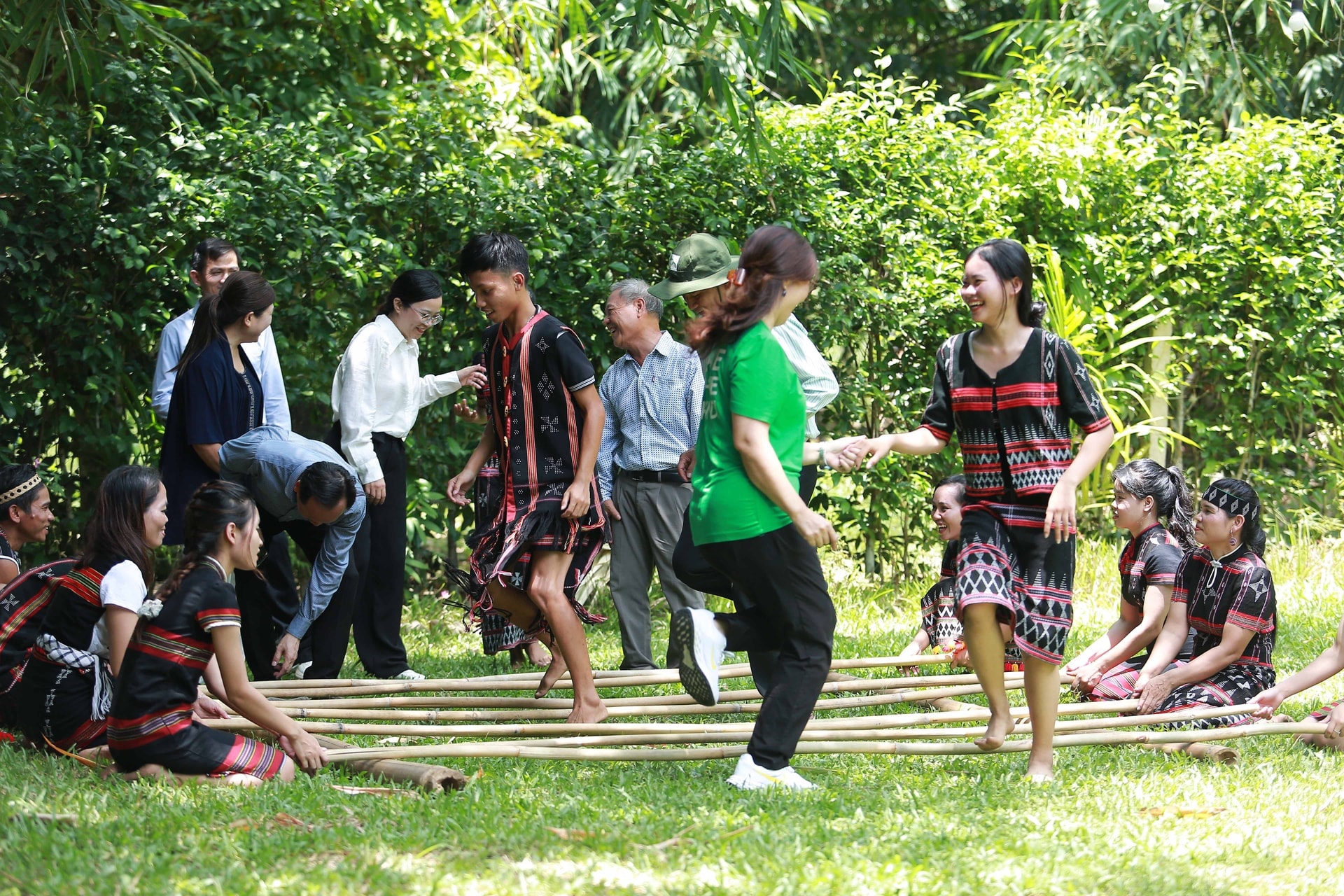
Tourists enjoy recreational activities at Mr. Dinh Van Nhu's homestay. Photo: M.T.A.
In the Cu De River basin - a land rich in natural resources with rivers, streams, forests, mountains, and peaceful villages, community-based tourism has transformed rural life for more than a decade.
In the past, people in the upstream areas of the Cu De River mainly depended on forests and slash-and-burn agriculture to earn a living through such activities as firewood collection and timber harvesting. Over time, the community began to recognize the tourism potential of the existing natural landscape.
As a result, many households have shifted their economic orientation, with a focus on developing homestays and offering experiential services to visitors. This transition has significantly improved household incomes and greatly contributed to local socio-economic development.
A typical example is the Nam Yen Homestay in Nam Yen Village, which serves not only as accommodation but also as a cultural exchange hub between visitors and local residents.
Its owner, Ms. Do Thi Huyen Tram, shared that acquiring skills in management, hospitality, and networking with sustainable tourism models was a crucial factor for long-term development. Such efforts enable visitors to experience local lifestyles while helping residents enhance professional capacity and raise awareness of environmental protection.
However, maintaining and expanding community-based sustainable tourism presents major challenges: how to preserve indigenous cultural values while avoiding harm to natural ecosystems.
According to experts, tourism development should not only concentrate on economic benefits but also must be integrated with community education on waste management, forest conservation, and the sustainable use of natural resources in tourism activities, thereby minimizing negative environmental impacts.
The initial success of tourism models in the Cu De River area, particularly in Hai Van Ward, has provided valuable lessons in community-based tourism development.
Linking infrastructure and fostering cultural exchanges between the Cu De River basin and western communes of the city such as Song Kon, Song Vang, Dong Giang, and Tay Giang are viewed as a long-term, effective approach that fully leverages existing potential.
This strategy not only expands development opportunities for suburban and rural areas but also contributes to positioning Da Nang as a sustainable tourism destination, ensuring the harmony between economic growth and nature conservation.
Translated by My Dung